Surgical Approaches in Male Breast Reduction
Depending on whether the enlargement is predominantly fatty (pseudogynecomastia), glandular (true gynecomastia), or a mixed anatomical presentation, our surgical protocol utilizes tailored techniques:
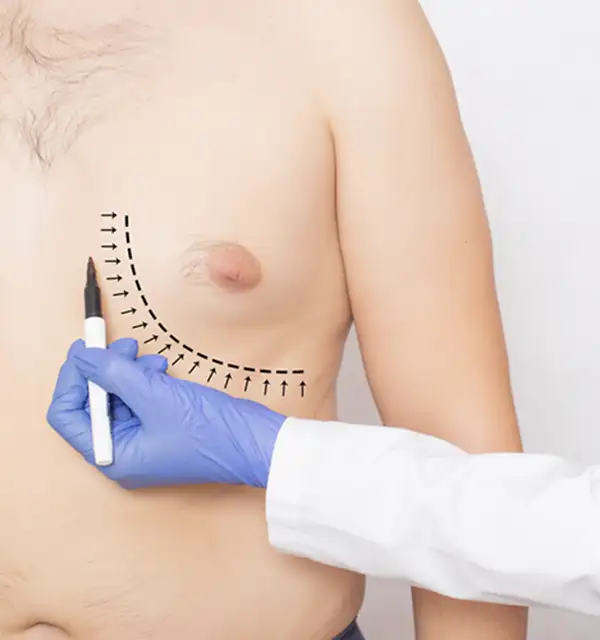
✦ Liposuction & Pectoral Sculpting: Through tiny 3 mm side punctures, excess fatty deposits surrounding the pectoral muscles are extracted using ultrasound-assisted or tumescent liposuction to sculpt a defined chest outline.
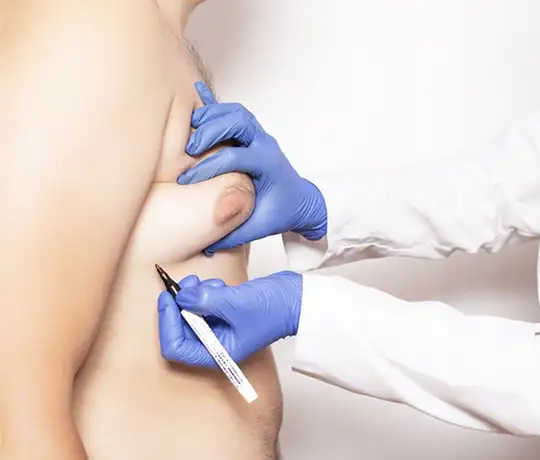
✦ Subcutaneous Gland Excision: Firm glandular tissue directly beneath the nipple-areola complex is meticulously excised through a discreet semicircular micro-incision along the lower half of the areolar border (Webster incision).
✦ Skin Redraping: In younger patients with good skin elasticity, the skin retracts smoothly over the newly contoured pectoral wall without requiring external skin resection.
Postoperative Recovery & Compression Vest Protocol
Recovery from male breast reduction is straightforward and well-tolerated. Essential post-surgical care milestones include:
✦ Medical Compression Vest: A custom compression garment is worn for 3 to 4 weeks to eliminate dead space, minimize post-op swelling, and support the skin's adhesion to the pectoral muscles.
✦ Return to Daily Activities: Most patients return to desk work and light social routines within 3 to 5 days following surgery.
✦ Physical Exercise: Light cardiovascular walking can begin after the first week; upper body weight training and heavy chest workouts must be paused for 4 to 6 weeks.
Frequently Asked Questions About Gynecomastia Surgery
✦ Is gynecomastia surgery permanent? Can the chest enlarge again?
Yes, the results are permanent. The excised glandular tissue and extracted fat cells cannot grow back. Maintaining a stable weight and avoiding anabolic steroids ensures lifelong chest definition.
✦ Are the surgical scars noticeable after gynecomastia surgery?
No. Incisions are strategically concealed along the natural color border of the lower areola (periareolar line) and heal into virtually invisible faint lines.
✦ Is male breast reduction painful?
Post-operative discomfort is mild and typically feels like chest muscle soreness after an intense workout. It is comfortably managed with prescribed mild analgesics during the first 2 to 3 days.
✦ What is the anesthesia type, stay duration, and recovery time for gynecomastia surgery?
The surgery takes approximately 1 to 2 hours under general anesthesia in an accredited hospital setting. Patients are safely discharged on the same day and can resume desk work within 5 to 7 days.