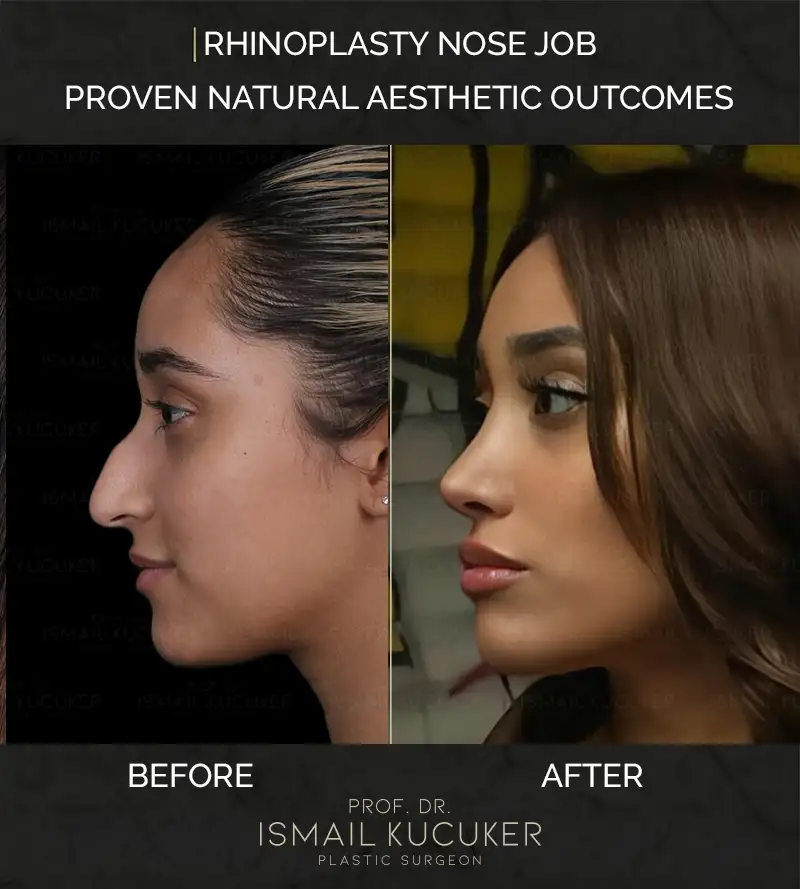
Can My Nose Return to Its Original Shape After Surgery?
Living cartilage possesses "cartilaginous memory"—a biological tendency to slowly drift toward its pre-operative vector. To counteract this force, modern structural rhinoplasty utilizes robust stabilization techniques, including septal cartilage grafting, rigid extended spreader grafts, and internal fixation to maintain lifelong anatomical alignment.
Predictability and Biological Healing Variables
Surgical outcomes depend on human biological variables, including individual scar contracture dynamics, microvascular circulation, and skin thickness (thin vs. thick skin envelopes). Unpredictable cicatricial forces during the one-year remodeling period can occasionally require minor secondary refinements for optimal long-term satisfaction.
Surgical Recovery Timeline & International Travel Protocol
For international patients traveling to Istanbul, we recommend a minimum stay of 7 to 8 days to complete all post-operative checks and splint removals safely before flying home.
✦ Day 1 (Post-Op Discharge): Overnight hospital observation with specialized cold-pack compression to minimize bruising and initial swelling.
✦ Day 7 (Splint Removal & Fit-to-Fly): External thermoplastic splint and silicone internal splints are painlessly removed; international patients are cleared for their flight.
✦ Week 2–3 (Social Life Resumption): Major visible edema subsides significantly; patients comfortably return to desk work and light social activities.
✦ Month 1–3 (Structural Settling): 70–80% of surgical swelling resolves, breathing passages stabilize, and light cardiovascular exercise can resume.
✦ Month 12 (Final Result): Complete bone and cartilage remodeling is achieved, revealing the final, refined nasal contour.
Advanced Scar Management and Keloid Protocols
✦ Absolute Nicotine Cessation: Refraining from all nicotine products is mandatory, as nicotine induces vasoconstriction and impairs microvascular columellar healing.
✦ Moisturization & Topicals: Keeping incision lines lubricated with prescribed medical antibiotic ointments accelerates rapid re-epithelialization.
✦ UV & Sunscreen Protection: Direct sun exposure and tanning beds must be avoided for at least three months to prevent permanent hyperpigmentation of the scar.
✦ Targeted Silicone Therapies: Applying specialized scar-reducing silicone gels twice daily starting on day 15 supports smooth tissue remodeling.
Pre-Operative Preparation & Fasting Guidelines
✦ Medication & Supplement Pause: Blood thinners, aspirin, NSAIDs, Vitamin E, green tea, and herbal supplements must be stopped 10 days prior to surgery.
✦ Morning Surgeries (Before 12:00 PM): Strict NPO status (nothing by mouth, including water and chewing gum) from midnight prior to surgery.
✦ Afternoon Surgeries (After 1:00 PM): Light breakfast before 7:00 AM, with clear water permitted only until 10:00 AM. Strict fasting thereafter.
✦ Hospital Admission Timing: Inpatient check-in is required 3 hours before surgery if pre-op lab panels/ECG are pending, or 1 hour prior if tests are completed.
Required Post-Operative Care Kit Checklist
✦ Isotonic Saline Sprays: Sterile ocean water or saline sprays (e.g., Sterimar, Tonimer) to cleanse nasal passages following splint removal.
✦ Ophthalmic Antibiotic Ointment: Prescribed medical ointment to keep columellar suture lines sterile and soft.
✦ Gel-Filled Cold Packs: Cold compression pads applied to the periorbital area during the first 48 hours to minimize bruising and edema.
✦ Sterile Cotton Swabs & Arnica: Cotton-tipped applicators for cleaning the nares and topical arnica cream to speed up bruising resolution.
Frequently Asked Questions About Rhinoplasty
✦ Is rhinoplasty a painful surgery?
Most patients report minimal to no actual pain during recovery, describing the sensation primarily as mild nasal congestion similar to a head cold during the first 3–4 days.
✦ When can I wear glasses and sunglasses after surgery?
Heavy eyeglasses resting directly on the nasal bridge should be avoided for 6 to 8 weeks post-op to prevent structural displacement while bones are consolidating. Contact lenses can be worn after the first 3 days.
✦ How long does it take for thick skin swelling to resolve?
Patients with thick, sebaceous nasal skin experience prolonged edema. While the main shape is visible around 3–6 months, the definitive refined tip contour takes 12 to 18 months to fully manifest.
✦ Will I have visible scars after open rhinoplasty?
The microscopic inverted-V incision placed across the columella fades into an almost invisible fine line within a few months when supported by proper silicone scar care and sun protection.